Earlier this year, Andhra Pradesh laid the foundation for Google’s $15 billion AI hub near Vizag - a hyperscale data centre project with AdaniConneX and Airtel Nxtra as partners. For a country that has spent years saying that it must not miss the AI bus, this was a moment to celebrate. Google is not alone. Adani has announced plans to invest $100 billion in renewable-powered, AI-ready data centres by 2035. Tata’s data centre business has signed up OpenAI as a customer, starting with 100 MW of capacity. Reliance, Amazon, Microsoft and others are all circling the same opportunity. India’s data centre capacity, already growing fast, is expected to cross 3 GW by 2028. Suddenly, AI is not something that is used in India but built in in San Francisco or Seattle. This AI cloud will be built in India, by Indian engineers using Indian land, electricity, and water.
This is unequivocally good news. India needs sovereign AI infrastructure. Indian companies need local compute and our startups need affordable access to models, the government and armed forces need sovereign AI, and our GCCs are becoming serious AI deployment engines for the world. If AI is the new electricity, India cannot remain dependent on someone else’s turbines and grid.
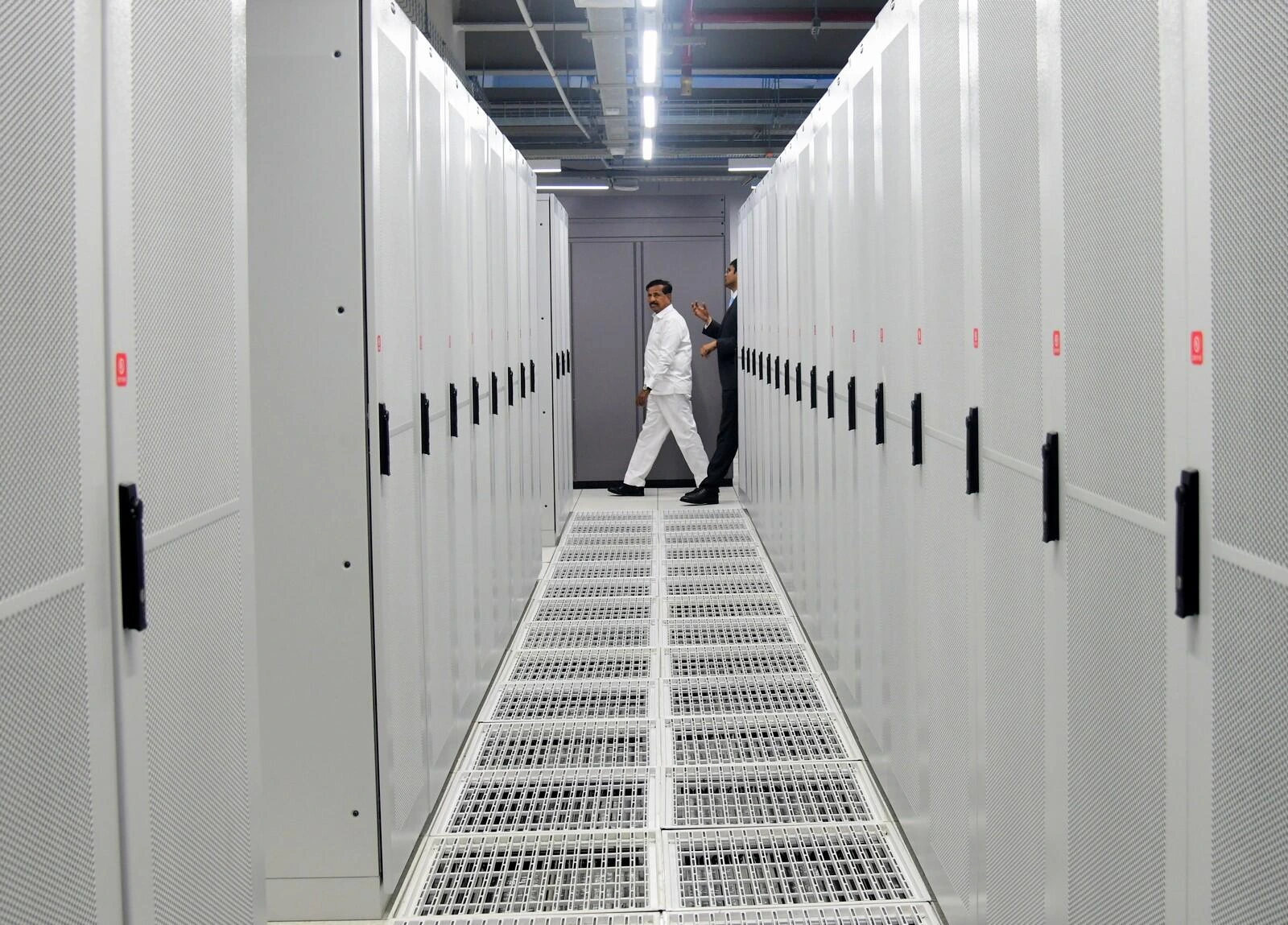
However, most often we think of ‘the cloud’ as a fluffy white thing floating harmlessly above us. But this cloud casts a shadow on land and has a real, physical body with millions of GPUs and thousands of servers tightly packed in racks running 24x7. This body needs land, water, power, cooling systems, diesel backups, permissions, tax breaks, and, often, silence from the people who live nearby.
The biggest shadow the cloud casts is on water. India is already one of the most water-stressed large countries in the world. Nearly 600 million Indians face high to extreme water shortage, and water demand is expected to be twice the supply by 2030! When local communities feel that companies are sipping from the same aquifer as farmers and households it results in societal backlash. This has already begun in force in the US. Closer home, the Plachimada Coca-Cola dispute in Kerala, became a symbol of a deeper fear that corporate thirst can empty village wells faster than nature can refill them.
And compared to AI data centres, soft-drink bottling may look like just the appetizer.
Data centres are water guzzlers. A medium-sized data centre can consume roughly 110 million gallons of water a year to cool its AI servers and GPUs, enough for around a thousand households. Large facilities can use up to 5 million gallons a day, which is comparable to the water needs of a small town. Multiple estimates suggest that India’s current data centres consume 150 billion litres of water annually, and this is before the AI expansion really takes off! There is also electricity, the data-centre demand for which could reach an eye-watering 13.56 GW by 2031/32. If it is planned well, powered by renewables and connected to new grid capacity, it can strengthen India’s energy transition. If it is planned badly, it can compete with cities, factories, irrigation pumps and households. The “AI factory” cannot be allowed to become the new VIP consumer, getting assured power while the ordinary citizen gets load-shedding and higher tariffs.
Then comes land. Land acquisition in India has rarely as a happy story. Data centres are vast buildings taking acres of land, and it does not create employment in proportion to the land and power it consumes. Even data centre noise is an issue with cooling systems and electrical equipment producing a constant unsettling hum. In parts of the US, residents living near data centres are complaining of 24/7 noise, low-frequency vibration, sleep disruption and falling quality of life.
So, what should India do? Stop building data centres is not the solution. AI infrastructure will be as important to the 21st century as dams, railways, ports and power plants - evocatively referred to as the “temples of Modern India” - were to the 20th,. The question is whether these become the Bhakra-Nangal dams of the AI age, or the East India Company factories of the compute age - impressive structures that extract local resources for distant masters.
China offers one useful lesson. Its “East Data, West Computing” strategy moves data centres to western regions with cheaper land, abundant renewable energy and natural cooling, while serving demand-heavy eastern cities through networks. In other words, build compute where resources are plentiful, and pipe intelligence to where demand lives.
- First, India needs its own version of the above, where we put large AI data centres where water, clean power, land and grid capacity make sense, not where politics, subsidies or proximity to a port make a deal attractive. Locate hyperscale AI campuses near renewable energy zones, treated wastewater sources, cooler climates, and robust transmission corridors; not in Mumbai, Vizag or other big cities. Rather, connect them to these cities through fibre, not through local ecological stress.
- Second, make water transparency mandatory where every AI data centre should disclose its expected water usage, source and cooling technology, before approvals are granted.
- Third, price resources honestly. If a data centre needs premium power, land and water, it should pay for it. Part of the project economics should fund municipal water systems, grid upgrades, local schools, skilling centres and health facilities, so that local communities must see tangible benefit, not just national pride.
- Finally, India should build green data-centre standards and regulation before a US style backlash begins. Using recycled or non-potable water, dry cooling in water-stressed regions, renewable power purchase agreements, buffer zones for noise and independent audits.
AI is not just software anymore, but a utility and industrial infrastructure. If we treat data centres as invisible clouds, we will ignore their very visible costs. India should build the AI factories it needs. But it must build them with the wisdom of a civilisation that has always known the sacredness of water, land and energy. The cloud is welcome, but it should not cast a dark shadow on Indian soil. Else, it will come down to earth.

Written by
Jaspreet Bindra
Jaspreet is the Founder of AI&Beyond, Tech Whisperer UK